Tuesday, June 21, 2016

Creating a learning environment

Create:

Class setup:

Classroom Rules:
1. Listen and valued each others opinions
2. Listen when someone else is speaking
3.Follow directions
4.Show respect for classroom, class mates and school
5.Work quietly and do not disturb others
6. Keep hands/feet/objects to yourself
7.Always try your best
8.Raise your hands
9. Use kind words
10.Never give up!

Class procedures and routines:
Routine:
1-Children arrive 2-put away bookbags 3-attendance 4-do now-collect homework/worksheets 5-lesson 6-activity 7-quiet work 8-lunch 9- independent reading 10- lesson 11- activity- 11- lesson 12- homework

Procedures: Leave things neatly how you found them. Walk in lines in the hallway. Respect others. When the teacher, is talking you are listening.

Evaluate:
Source: Sieberer-Nagler, K. (2016). Effective Classroom-Management & Positive Teaching. English Language Teaching, 9(1), 163-172.

Summary:Classroom management is supposed to save time, by explaining the rules and set up of a classroom early on, so more time can be spent on important things like reading and learning. On the first day of class the rules should be established, "if you need paper or a stapler you can find them here" and " you do not have to ask me for them". Getting these procedures in early will save you a lot of time and students will also know what is allowed and expected from them. I really liked the quote from the article, "It is possible the most difficult aspect of teaching for many beginning teachers is managing students’ behavior. The time a teacher has to take to correct misbehavior caused by poor classroom management skills results in a lower rate of academic engagement in the classroom. Effective classroom management involves clear communication of behavioral and academic expectations as well as a classroom environment conducive to learning" (Sieberer, 164). Setting up classroom management strategies early will help run a better classroom and give your students more structure.

Teachers blogs:Stephanie. I'm a 5th year teacher living in Colorado.
Link:
Who is the author and the web site? Stephanie. I'm a 5th year teacher living in Colorado, who previously taught 1st and 2nd grade.
 
How does this author describe a classroom management issue? She has a whole section of her blog on her classroom management and organizational set-up. She said the most important component in classroom management is having a clean organized set-up because this will help maintain order.

How does this author's situation compare to that of the article you read? The blog and the article I read are similiar, but I think Stephanie is the voice of a real teacher, where the article was written by professors or researchers. They both have good tips but I enjoy reading from the point of view of a real teacher and their experiences, compared to a researcher.

Does the teacher use effective classroom management? There are many bins and shelves for organizing. The walls are full of student's work and posters but looks so neat! The classroom looks so clean and looks like it fosters learning. She uses a lot of techniques I am learning about in all my classes, including: sentence strips, reading corners and model centers!

Relate:
Classroom Flyer

Tuesday, June 14, 2016

5 Blog Questions

The blogs are assigned for you
Make sure to reflect on 5 of the following questions after reading and referencing our text book (when the appropriate chapter is assigned and in the summary). E.g.:
1)   What is the role of educational psychology in understanding teaching and learning? How can we use research to understand and improve teaching?
Educational psychology is useful in understanding teaching and learning because it is important to understand how children learn and the best ways and methods to teach them to learn. I enjoyed reading the first chapter that talked about the relationship of students with their kindergarten teacher predicting their future educational success. I always liked reading what was involved in being a successful teacher, for example: having high expectations, being sensitive to needs and providing feedback. As teachers it’s important to give and teach students the skills they need to know not only about math and science but about how to develop good social and emotional skills. If we know where children are developmentally, we as teachers know the best way to help them and what they need. In elementary school children are developing physically, personally, socially, and cognately, so following academic psychology research you can incorporate methods that have been proven to be helpful.
2)   Describe, in detail, Kohlberg's Stages of Moral Development.
Kohlberg’s Moral Reasoning contains six different levels of how children develop moral skills. Level one is Preconvention Morality and is contains the two earliest stages. Stage one is Obedience and Punishment is when children see rules as absolute. In stage two Individualism and Exchange children begin judging decisions based off individual needs and off different points of view. Level two is the Conventional Morality and is contains stages three and four. Stage three is Interpersonal Relationships refers to the “good-boy or good-girl” orientation that has to do with living up to the expectations of others. Stage four is Maintaining Social Order which takes into accounts society’s view of what is right and wrong.  Level three is the Post conventional Morality contains stages five and six of moral development. Stage five is Social Contract and Individual Rights this is when rules are followed because they are the law. And lastly, stage six in Universal Principle and is the final step of moral development. In this stage morals are decided based off the universal ethical principles and abstract reasoning (Woolfolk, 2013).
3)   According to your text, what does intelligence mean? How is intelligence measured? What should teachers know about intelligence? Have you ever known someone "really smart"? What were they like? Was everything "easy" for them?
Intelligence is defined as the ability to learn from our past experiences and acquire knowledge, and to use resources to adapt to new situations or to solve problems. (Woolfolk, 2013). Intelligence is usually measured through IQ test and other standardized test. These tests are normally norm references or criteria referenced. Norm references are the average performance of all who have taken the test. Criteria referenced means it is compared to pre-established standards (Woolfolk, 2013). Teachers should know that there are different types of intelligence and that there is not a set label or image of what is looks like. Intelligent students normally only mean the gifted and talented students and often students with disabilities are left out of this category because they do not fit the mold of what many people and teachers consider intelligent. Students with special gifts excel in some way compared to other students of the same age. There is much debate how giftedness or intelligence should be measured by. I have known someone that was “really smart”, I don’t think it was that they already knew everything but that they always wanted to know more and do things in a new way. I don’t think everything was easy for them but they kept trying and thought of innovative ways to go around a problem. I think intelligent people like working together and building off of other people. They are normally good at communicating on topics that interest them and dive deep within subjects.

4)   Discuss Token Reinforcement Programs that apply to the classroom.
Token Reinforcement Programs in the classroom improve student motivation and to manage behavior. Students who are motivated and engaged are more likely to learn, so using token reinforcement in the classroom to reinforce or reward positive behaviors will make it more likely to occur again in the future. In token reinforcement it is used as a system of collecting so many of something in exchange for something later. You must first know what behaviors you want and want you want to change. Once target behaviors are established you must find out what is reinforcing to each student in order for the reinforcement to be affective. It is also important to define the behavior clearly to the student so they know exactly what is being asked of them. Token Reinforcement can be praising students, sticker systems, prizes for so many stickers collected. Tokens should not be thought as currency and should be given more than one at one time or for one behavior. And it is important to never taken away tokens students have earned, you must only not give any for undesirable behavior (Woolfolk, 2013). I think Token Reinforcement Programs are especially helpful in the special education classroom. It clearly sets desired behaviors and gives reinforcement right after the behavior. It is similar to operant conditioning, which is consequences, rewards and punishments after a desired response or behavior.

5)   Does anxiety promote or inhibit learning? Should anxiety be used as a stimulus for learning?  
Anxiety inhibits learning and should not be used as a stimulus for learning. In the classroom you want students to feel safe and comfortable because this in the best environment for them to learn. When students are anxious they are less like to perform well. Test taking can cause anxiety and limit the performance on tests. When we are anxious attention and focus are decreased. Students must feel calm and safe about learning. During my observations I observed a practice state test being administered, the teacher played alpha waves for her students during the test. Alpha waves are calming and it is similar to the music played during yoga which is supposed to calm students and make it easier to focus.


References
Woolfolk, Anita (2013). Educational psychology. (13th ed.) Needham Heights Massachusetts: Allyn and Bacon.


Monday, June 13, 2016

Field Work Task 6/7

Task 6-
Since me observations were at the end of the school year, I observed and witnessed many assessments being done. Assessments test what the students know and have learned over the course of the year. I observed an incident of learning when a boy who was not a native speaker of English was mispronouncing words wrong that had the ending “ght” before reading the teacher reminded him the ending and the sound it makes and when reading out load he pronounced it correctly. He then went on to finish the passage and pronounced the “ght” ending correctly three more times! You could see the light bulb going off in his mind and you can tell he really understood it in that moment. She also gives them prior knowledge and information they might need. Before reading a passage about a falcon, she didn’t assume all students knew what a falcon was. She asked how knew what a falcon was, almost all students except 5 knew, so she had students explain to each other what a falcon was while she looked one up on the internet. The teacher I observed used positive and negative reinforcement in her one on one lessons. Positive reinforcement is presenting a motivating or reinforcing stimulus after the desired behavior, making it more likely to happen in the future. A negative reinforcement is when a certain stimulus is removed after a behavior, this makes future behavior increased because of removing or avoiding negative consequences. Positive reinforcement that I observed was the teacher giving students five minutes of free play after completing an activity. She also awarded students for completing all assignments for the day with stickers and stickers for good behavior. Negative reinforcement I saw was when she took away an eraser that was starting to distract a boy, so he would be able to focus again.


Tasks 7-
When I asked the teacher ways the help her and her students remember concepts and new material she said mnemonics, notecards and concept maps. It’s important to show students different ways of remembering and studying so they can find the one(s) that work best for them. One student I asked said writing down the same thing over and over again helps them remember. Another said visualizing and making a picture in their mind helps them remember. I think uses multiple approaches is so important to make sure students are learning all ways to remember. This can include utilizing their sensory memory that allows them to use their five senses, perception which allows the students to assign meaning to a stimulus and teaching students to look for relationships and patterns. The teacher I observed ( Ms.R) said it appeals students remember the material better in subjects they are most interested in. This makes senses because when students are interested and engaged their going to want to learn and remember what they are learning. If they are not interested they will just be passively learning instead of actively learning.  Making learning fun is also important, getting kids up and learning will be more memorable to them then just reading something out of a text book. This is especially true in subjects which as art and science. Bringing the material to life in any way possible will help students remember and be excited about learning. She recommends beginning teacher to learn about their students and their interest to better help them remember the information better. As an example she said if a student really likes music you can put the information into a song or a rhyme. It has to be something they enjoy or are good at which will give them the extra confidence to remember and want to remember.


Field Work Task 5

Task 5-
I observed many examples that show children’s cognitive, social, emotional and physical development. I observed a fourth grade classroom and observed students with different level of fine motor skills. One boy in the classroom has Autism and he had very low fine motor skills so he uses a computer to type his notes in class. I observed that the girls were taller and weighed more than boys, which goes with what I read in chapter three. The teacher let them use a lot of model centers and interviews to make learning more fun and allow them to experiment socially in their environment. Children develop at different rates and are developing in different areas but gradually. Their brains are shaped by activity, culture, content and experiences. So as teachers it is so important to give students the opportunity and experiences they need to grow because they may be missing out on crucial experiences based off their cultures or socioeconomic situations.


Field Work Task 4

Task4-
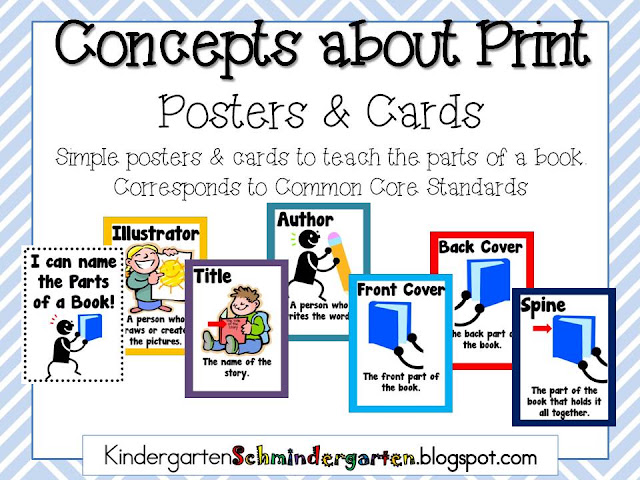
While observing the classroom I noticed individual needs of students some of these include: print awareness, improving reading concepts, teaching comprehension strategies and the important of using open ended questions. I also saw the importance of print concepts, phonemic awareness and a desire to learn to read and write, all of which I saw in my teacher’s classroom, through the use of posters, charts and access to a lot of books. Having a print-rich classroom is really important I learned because it encourages and promotes reading, this is something I saw a lot of students needing. Something else I took away from observing was the importance and need of the foundational activities that include storytelling, read alouds, and model centers. I like the ideas of the model centers because it shows real life situations and how print is everywhere in the world. In the model centers I observed, students are presented with a mock restaurant or doctor’s office which allowed for real world situation to take place in the classroom. I think this is a good idea because children get to get out of their seat and use their imagination, reading a menu or a chart in the doctor’s office. This would also offer a more diverse and different approach to reading then just books and the students really seemed to enjoy them. I think this would get the students interested in reading, out of their chairs and getting some of their energy out in a productive way. The most important thing I took away from this observation though was the importance of having a lot of books. They show different comprehension strategies such as calling on prior knowledge, predicting, questions, wondering what will happen next and determining the most important details. I think it is very important to teach student these strategies because I think often it is something we assume students know. If a child is reading and not understanding the text it is probably because he hasn’t developed these skills. It is also important to have a large variety of lessons to allow for differentiated learning. Open ended questions promote comprehension and understanding, instead of asking yes or no answers. I also saw a need for learning through fun activities, this get students engaged and more motivated to learn. Instead of a quiz on a class wide book they read, the teacher had them break off into different groups and do an Oprah Winfrey interview with one another. I also like the idea of the Oprah Winfrey Interview and plan on implementing them in my future classroom. I think it is fun and allows students to make connections and encourages a deeper understanding. Students must either learn in-depth about an author or individual to be able to pretend to be them or the students who are the interviewer or asking the questions show they understood the material by asking questions to the interviewee and fosters literature conversations.


Field Work task 3

Task 3-

I observed in a fourth grade classroom, at this age of development children are growing cognitively, socially, and morally. Ms. R said she liked to teach her students the skills they’ll need to be successful in all areas. She thinks one of the best ways to teach this is allow them to learn from each other. She uses the child development characteristics in her lesson which includes using multiple intelligences to count, talk about with partner and talking through different problems. This uses Gardner’s Theory using the linguistic, interpersonal, and intrapersonal. Allowing the students communicate with each other allows them to learn and collaborate with one another. Ms. R uses Zone of Proximal distance in her lesson to give students confidences to do work and then slowly backing off so they can do what they can on their own. She said that students are on all different levels of developing so it is so important to learn about your students and what they can do and what they need help with in planning your lessons. If children are developing similarly you can group them and allowing them to work and build off each other. Depending on the assignment she will group stronger students with students a little behind to learn and work together and build positive peer relations. 


Field Work task 2

Power Point!


Task2-
·         The first person interviewed named being resilient, understanding and compassionate as three characteristics shared by intelligent people.
·         The second person interviewed said that being hard-working, pushing boundaries and being able to work/learn from others as three characteristics shared by intelligent people.
·         The third person interviewed stated that three characteristics shared by intelligent people are being able to take criticism, always wanting to learn new things, thinking innovatively


Summary:
■All people interviews thought that intelligent people are never done learning. They want and have a need to learn new concepts and ideas. Working together was another common theme in the answers. Intelligent people like working together and learning from one another because it is a fast and productive way to learn, by learning from others. They collaborate and work well with others and are team players. Thinking of new ways to solve problems and being innovative was another answer shared by some of the other people interviewed.